
Is SEO dead? No. SEO is not dead in 2026, but the version built on keyword stuffing and cheap backlinks is finished. Google's AI Overviews now touch a large share of searches and cut click through rates on many individual results, yet local intent, trust signals, and technical fundamentals still decide who ranks and who gets found. What changed is the shape of visibility, not whether it matters.
Is SEO Dead, or Just Different Now?
Is SEO dead, or just different now: it is different, not dead. The tactics that used to work on their own, keyword stuffing, cheap backlinks, one thin page per query, stopped working, while the underlying job of being genuinely useful, findable, and trusted did not.
Is SEO Dead in 2026? The Short Version
Is SEO dead in 2026: every major source we reviewed converges on the same structural answer, and it is not the headline. SEO is not dead, but the keyword and backlink only version of it no longer works alone. Neil Patel's 2026 analysis reframes the discipline as search everywhere optimization, while noting Google still controlled roughly 89 percent of United States web traffic in 2025. A separate industry review frames the question with a formal dead channel test, checking abandonment, falling investment, and platform redundancy, and finds SEO fails every one of those tests in 2026, since investment is rising and most marketers surveyed still say it works. One source put the current split plainly: what is dead is the 2018 style version of SEO, exact match anchors, keyword density tricks, and one URL chasing one query, not the discipline that replaced it.
A Pattern That Repeats Every Few Years
This is also not a new argument. A dedicated historical review found that "SEO is dead" has been declared after nearly every major platform shift since the late 1990s: the early search engine era, the 2003 Google Florida update, the 2010 to 2012 rise of social media, the mid-2010s algorithm changes, the 2018 to 2019 zero click panic, and now the 2023 to 2025 rise of AI search. Each cycle ended the same way. The shortcuts that were popular before the shift died, and the underlying discipline of being genuinely useful, findable, and trusted adapted and kept working. Treat the current AI panic as the newest entry in that pattern, not as the first time the ground has actually moved.
What Actually Changed in Search
What actually changed in search is where the answer shows up, not whether people still search. Google now surfaces an AI generated summary above the normal results for a large and growing share of queries, and that summary answers many questions before a searcher ever reaches a blue link.

Source: TechCrunch's July 2026 reporting on AI Overview prevalence, and Neil Patel's 2026 search-share analysis. Alongside AI Overviews, two other real shifts matter. First, Google's Helpful Content update pushed harder against thin, reformatted content, with several large publishers reporting significant traffic losses after the 2024 core update. Second, a new vocabulary showed up almost overnight: answer engine optimization and generative engine optimization, aimed at whether ChatGPT, Perplexity, Gemini, and Google's own AI Overviews trust a source enough to cite it. That vocabulary describes SEO in the age of AI, not a replacement for it, and it is newer than the underlying job it describes. The practical overlap between generative engine optimization and Google's own long standing helpful content guidance is large, entity clarity, consistent facts across the web, and demonstrable first hand expertise, which is exactly what Google already told sites to do before anyone coined the new terms.
How Many Google Searches Show an AI Overview Now?
How many Google searches show an AI Overview now: nobody outside Google can give one exact number, and the honest answer is a range, roughly 20 to 50 percent of queries depending on the methodology and the query set measured. A synthesis of multiple industry trackers found BrightEdge's commercial query tracker running near 48 percent, Semrush's ten million plus keyword panel peaking near 25 percent before falling back into the mid teens, and Conductor's own benchmark landing near 25 percent, while Google's own disclosure cites roughly half of United States queries. That spread is not one source contradicting another so much as different measurement methods answering slightly different questions.
| Search condition | Click rate on a normal result link |
|---|---|
| No AI summary present | 15% |
| AI summary present | 8% |
| A link inside the AI summary itself | 1% |
That data comes from the Pew Research Center's July 2025 study of real browsing behavior across 68,879 unique Google searches, the most rigorous first party click data available on this question. The same study found searchers were also more likely to end their session with no click at all after seeing an AI summary, 26 percent of the time versus 16 percent without one.
Does an AI Overview Really Cut Your Website Clicks?
Does an AI Overview really cut your website clicks: yes, at the level of a single search result, but the story is messier once you zoom out to a whole site. A widely cited analysis found the number one organic ranking losing roughly 58 percent of its clicks when an AI Overview appeared, up sharply from a smaller decline measured only months earlier, which is the strongest evidence that a top ranking is worth less per search than it used to be.

AI Overviews mean organic traffic is collapsing everywhere, for every site.
Search Engine Land's analysis found aggregate organic traffic down only about 2.5 percent year over year, far below the 25 to 60 percent drops often quoted in industry commentary, with the sharpest losses concentrated in mid sized sites while the largest sites actually grew.
Google itself disputes the more dramatic framing directly. Its own search team blog post states that total organic click volume from Search to websites has stayed relatively stable year over year, and that the average quality of a click, meaning a visit without a fast click back to the results, has slightly increased. The honest reconciliation is that both things are true at once, depending on which number you look at. Per query click through rate on an individual ranking is falling, sometimes sharply, while total site level traffic across the whole web has held closer to flat, because the queries that still send real clicks are sending them to a narrower set of sites that answer the question best.
What Has Not Changed at All
What has not changed at all is the substance Google says it rewards. Its own guidance on creating helpful, reliable, people first content still asks for original information, a real author behind the page, and honest signals of first hand experience, the exact same fundamentals that mattered before any AI Overview existed. We pulled the two sides into one table below, since no single source cited on this page lays out the changed column next to the unchanged column in one place.
| Changed | Did not change |
|---|---|
| Where the answer appears on the results page | Google still rewards original, first hand, well sourced content |
| Click through rate on a single ranking | Local intent still needs a real, complete business presence |
| New vocabulary: answer engine and generative engine optimization | Technical fundamentals like page speed and mobile usability still matter |
| How much of the results page an AI summary occupies | Trust, reviews, and a real track record still decide who gets picked |
Google's Creating Helpful, Reliable, People First Content guidance directly addresses AI generated content too: disclosure is reasonably expected when a reader might wonder how a page was produced, and mass produced or heavily outsourced content across unrelated topics is treated as a warning sign, not rewarded. If anything, that guidance has gotten stricter about thin or unoriginal content since AI made it easier to produce more of it faster.
Is Local SEO Dead Too?
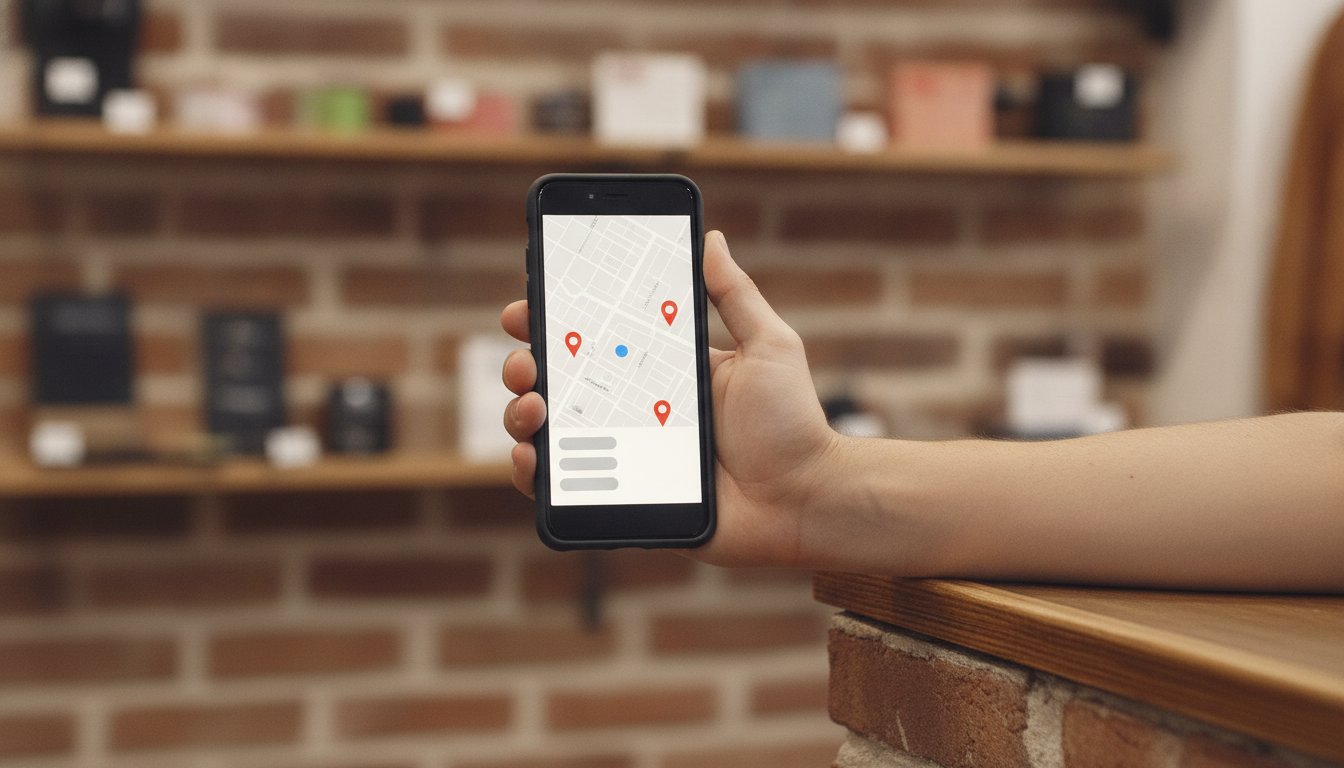
Is local SEO dead too: no, and the AI shift makes it more important, not less, because AI systems recommending a nearby business lean on the exact same profile and review data the map pack already ranks on.
Will AI Replace Google for Local Business Discovery?
Will AI replace Google for local business discovery: not for the kind of decision that actually pays a stateline business's bills. AI Overviews now show up on an estimated 68 percent of local searches, which sounds alarming until you notice what those summaries are built from. They pull the same signals a human searcher already relies on, a complete Google Business Profile, a consistent name, address, and phone number across the web, and a strong pattern of recent reviews. An AI system deciding which plumber or repair shop to recommend is reading the exact same profile Google's own local pack already ranks.
We watch this directly through our own Google Search Console data for statelinetech.com, a 215 page site we built and still run ourselves, as of August 2026: our core local rankings have not moved because of AI Overviews, though the surfaces where our name shows up have widened to include AI generated summaries alongside the regular map pack. That is the honest, first hand read from inside a real local service business, not a national brand or a software vendor's funnel, which is the exact perspective missing from most of what gets written about this question.
That is our own assessment, not a measured test, built from the pattern in the sources cited on this page: signals tied to gaming a ranking (stuffed keywords, bought links) are the ones AI systems are explicitly built to discount, while signals tied to real, verifiable business facts are the ones both a map pack algorithm and an AI summary depend on to avoid recommending a business that does not actually exist as described. For the full walkthrough of that foundation, see our guide to what local SEO actually is, and for the profile work specifically, see how to optimize your Google Business Profile.
What Is AEO and GEO, and Do They Replace SEO?
What is AEO and GEO, and do they replace SEO: no, they describe a narrower goal inside the same discipline, not a new one. Roughly three quarters of the URLs cited inside AI Overviews also rank in Google's organic top ten results, according to one widely cited estimate, which means the ranking strength that has always mattered is still the foundation AI citation gets built on top of, not a separate skill you learn instead of it. One industry source frames the split memorably: answer engine optimization helps AI answer the question, generative engine optimization helps AI decide who to quote. Either way, the practical work is the same work good SEO has always required: clear, factual, well sourced content with a real person standing behind it.
The sentence worth remembering from all of this: the version of SEO that is dying is the version built on shortcuts, and the version that pays the bills is not.
The version of SEO that is dying is the version built on shortcuts, and the version that pays the bills is not.
What Should a Local Business Actually Do Instead of Panicking?
What should a local business actually do instead of panicking about AI search: fix the foundation before touching anything AI specific, because the foundation is what both a human searcher and an AI system are reading. Claim and complete your Google Business Profile if it is not already fully filled in. Keep your name, address, and phone number identical across every directory that lists you. Ask every satisfied customer for a review, on a steady monthly cadence instead of a one time push. Write content that answers a real, specific question a customer actually has, in plain language, instead of chasing broad national keywords a stateline business was never going to rank for anyway.

Where our local SEO work actually earns its keep is the part that is hard to sustain alone every month: steady content, technical fixes, and watching what is changing in AI search closely enough to adjust before a client asks why the phone stopped ringing. If your foundation is already solid and your market only has one or two real competitors, the honest answer is often to keep doing exactly what you are doing. For the deeper cost and timeline math, see how SEO actually works and how long SEO takes to show results. For where AI is genuinely changing how people find a business day to day, not just how they search for information, see what AI can actually do for a business.
Frequently Asked Questions About Whether SEO Is Dead
Is SEO dead in 2026?
No. Every major source on this topic agrees SEO is not dead in 2026, only that the keyword and backlink only version of it stopped working alone. Investment in SEO is rising industry wide, not falling, which is the opposite of what a dying channel looks like.
Is SEO real, or has AI made it obsolete?
SEO is real, and AI search has not made it obsolete. AI Overviews and chat based search still draw heavily on the same signals SEO has always built: a complete business profile, consistent facts, and content that demonstrates real expertise. The tactics changed. The underlying job did not.
Will AI replace Google for local business discovery?
Not for the searches that actually turn into a phone call. AI Overviews now appear on a majority of local searches, but they pull from the same Google Business Profile and review data the map pack already relies on, so the work that wins local visibility has not changed.
What is GEO, and is it different from SEO?
Generative engine optimization, or GEO, focuses on whether an AI system trusts a page enough to cite it. It overlaps heavily with existing SEO fundamentals rather than replacing them, since most AI cited pages already rank well organically.
Should a small business stop blogging because AI Overviews exist?
No. Content that answers a real, specific, local question still earns trust signals, still gets cited inside AI summaries, and still gives a searcher a reason to click through instead of stopping at the summary. Broad, generic national content is what stopped working, not specific local content.
Stateline Tech provides local SEO for the entire stateline area, built on the same foundation we use to rank our own sites. Talk to our SEO team or call (608) 214-5158 to find out what actually needs fixing before you spend a dollar on anything AI specific.