
How much does Shopify cost? Most small stores pay $39 a month for the Basic plan, then give up about 3 percent of every card sale in processing, and add small amounts for a domain and an app or two. A realistic all-in bill for a new store with steady orders lands between roughly $90 and $200 a month. We break down every layer below and show the math at small-store volume, not agency volume.
How Much Does Shopify Cost Per Month?
How much does Shopify cost per month comes down to which of five plans you pick. The Basic plan is the answer for almost every small store: $39 a month billed monthly, or $29 a month if you pay for a year up front. Every plan starts with a 3 day free trial, and as of mid 2026 Shopify runs a standing promotion of $1 a month for your first 3 months. If you are still deciding whether you need a platform at all, start with our full guide to starting an online store.
Here is the full plan table. Prices and card rates below come from Shopify's official pricing page, pulled for this article in this year's July pricing check; Shopify has changed these numbers before, so treat the pricing page as the final word.
| Plan | Pay monthly | Pay yearly | Online card rate |
|---|---|---|---|
| Starter | $5 | $5 | 5% + 30 cents |
| Basic | $39 | $29/mo | 2.9% + 30 cents |
| Grow | $105 | $79/mo | 2.7% + 30 cents |
| Advanced | $399 | $299/mo | 2.5% + 30 cents |
| Plus | From $2,300 (3 year term) | Negotiated | Negotiated |
What the Starter and Plus plans actually are
The Shopify Basic plan cost is the number most people mean when they ask this question, because the two plans around it serve different animals. Starter at $5 a month is not a full store: it gives you checkout links you can post on social media, with no standalone storefront, and it takes a steep 5 percent per sale. Plus, from $2,300 a month on a 3 year term, is the enterprise tier for brands doing millions a year. Neither is where a small business starts.
How Much Does Shopify Take Per Sale?
How much does Shopify take per sale depends on your plan and how the customer pays. On Basic with Shopify Payments, an online card sale costs you 2.9 percent of the order plus 30 cents. People often ask whether Shopify will also take a cut on top of that: no, when you use Shopify Payments the processing rate is the entire per sale charge, and there is no separate commission.
The plan price is the total cost of running a Shopify store.
The bill has three layers: the subscription, the per sale processing fee, and extras like apps, a theme, and a domain. The plan price is only the flat part.

The $100 sale, worked out
Take a $100 online order on the Basic plan with Shopify Payments. The processing charge is $2.90 plus 30 cents, so $3.20 total, and $96.80 settles to your bank. The rate is not the same for every card: Shopify's own card rate documentation puts American Express and business cards at a higher tier, 3.5 percent plus 30 cents on Basic, so the same $100 order paid with a corporate card costs $3.80. That is arithmetic from the published rates, not a measurement from our own statements.
In person sales cost less per swipe
Card present rates run lower than online rates at every tier because in person fraud risk is lower. On Basic, a tap or swipe in person is 2.6 percent plus 10 cents instead of 2.9 percent plus 30 cents. If you sell at markets or a counter, that difference adds up quietly in your favor.
What Happens If You Do Not Use Shopify Payments?
If you do not use Shopify Payments, Shopify adds its own surcharge on top of whatever your outside payment provider already charges. Per Shopify's official third party transaction fee documentation, that extra fee is 2 percent of the order on Basic, 1 percent on Grow, and 0.6 percent on Advanced. The stacking is the part that surprises people: you pay the outside gateway its own processing rate, and then you pay Shopify the surcharge on the same order. For nearly every store in the United States, the practical answer is to turn on Shopify Payments and never think about this fee again.
Is Shopify Cheaper If You Pay for the Year?
Shopify is cheaper if you pay for the year: annual billing cuts the three core plans by roughly 25 percent. On Basic, twelve months at $39 costs $468, while the annual rate of $29 a month works out to $348 paid up front, a saving of $120 a year. That is our arithmetic from the published plan prices. The catch is commitment: the annual payment is not something to prepay while you are still finding out whether the store works.
Our rule of thumb at the bench: stay on monthly billing for your first several months, then switch to annual once the store has proven it earns its keep. The 25 percent discount will still be there.
What Other Costs Come With a Shopify Store?
The other costs that come with a Shopify store are a domain, a theme, apps, and hardware if you sell in person. None of them are hidden, but only the domain is close to mandatory, and the app line is the one that grows when you are not looking.
Domain name cost
A custom domain bought through Shopify typically runs $10 to $30 a year depending on the extension, per Shopify's own domain cost guide; a .com sits around $16. Outside registrars can beat that by a few dollars, especially on renewals, and a domain you register elsewhere connects to Shopify without penalty.
Theme cost, free versus premium
Shopify ships roughly two dozen free official themes, and a free theme is a fine place to start. Premium themes in the official theme store run $100 to $500 as a one time purchase, with most falling between $180 and $400 per the 2026 theme price guides. Buy one when the free theme is the thing holding your conversion back, not before.
App costs are the quiet bill grower
Apps are where a $39 plan quietly grows into a much bigger monthly bill. A July 2026 App Store benchmark counts roughly 22,000 apps, about 68 percent of them paid at the entry tier, with a median paid starting price near $9.99 a month and about 70 percent priced under $20. One review app and one email app is a normal small store stack; five apps at $15 each is a second subscription you did not plan. Stateline Tech provides ecommerce consulting for exactly this stage, auditing what an app stack actually earns against what it costs, though most brand new stores do not need that help until the app bill starts creeping.
We rate the bill creep risk of each extra like this, from our own store spending over the years:
Selling in person adds POS Pro
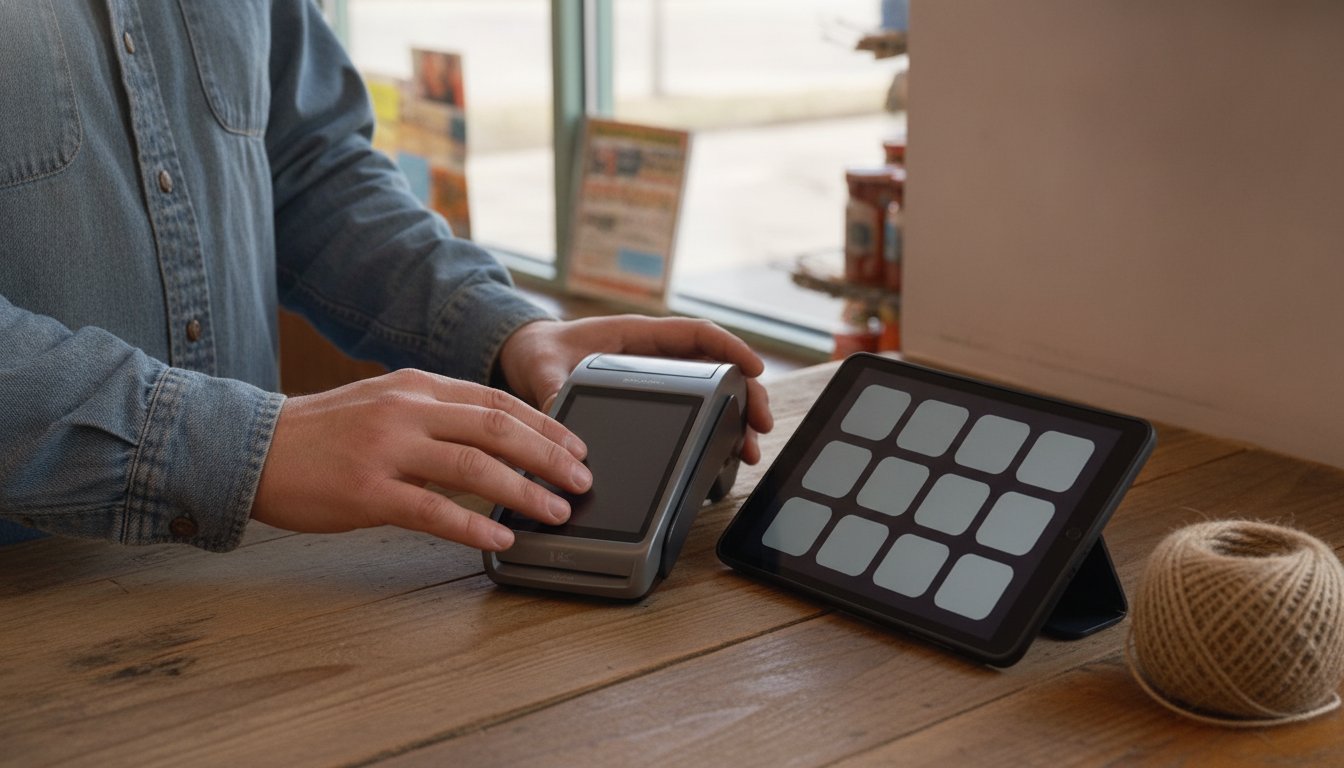
Basic card reader checkout is included on every full plan, but the full retail feature set, POS Pro, costs an extra $89 a month per location on the same July pricing pull, about $67 a month if paid annually. A booth at the farmers market does not need it; a staffed storefront with inventory counts usually does.
What Does a Small Store Really Pay Each Month?
What a small store really pays each month is more than the sticker price and less than the fee horror stories suggest. The cost guides that rank for this question run their examples at $30,000 a month in revenue and up, which is not where a small business lives. So here is the math at real small store volume.
Method, stated plainly: Basic plan billed monthly at $39, every sale a $50 online order through Shopify Payments at 2.9 percent plus 30 cents, one $15 a month app, and a $16 a year domain rounded to about $1 a month. This is arithmetic from the published rates, not a measurement.
| Monthly sales | Orders | Card fees | Total bill |
|---|---|---|---|
| $1,000 | 20 | $35 | $90 |
| $4,000 | 80 | $140 | $195 |
| $10,000 | 200 | $350 | $405 |
Read the percentages, not just the totals. The platform takes about 9 percent of a $1,000 month but under 5 percent of a $4,000 month, because the $39 floor stops mattering as volume grows. Shipping labels are the big cost this table leaves out, since they vary wildly by product; our guide on how to calculate shipping costs for an online store covers that side of the ledger.

Which Shopify Plan Should You Start On?
Which Shopify plan you should start on is Basic, for almost every small store reading this. The higher tiers sell a lower processing rate, and that discount only pays for itself at volume. The arithmetic: Grow costs $66 more per month than Basic at monthly billing and trims the online card rate by 0.2 points, and 0.2 percent only recovers $66 once you are processing about $33,000 a month in card sales. Under that line, the upgrade is a discount you are not using.
Under $30,000 a month in sales?
Stay on Basic. The rate savings above it cannot pay for the plan jump yet.
Need five staff logins?
Grow includes 5 staff accounts and better reporting; that is its honest use case at small scale.
Need live carrier rates at checkout?
Advanced unlocks third party calculated shipping; most small stores charge flat rates instead.
Selling only through social links?
Starter at $5 works, but remember the 5 percent per sale and no real storefront.
How Do Shopify Fees Compare to Etsy and Amazon?
How Shopify fees compare to Etsy and Amazon comes down to a flat floor versus a bigger cut. Shopify charges you whether or not you sell; marketplaces mostly charge when you do, but they charge more per sale. As of 2026, Etsy's official fee policy stacks a 20 cent listing fee, a 6.5 percent transaction fee on the item plus shipping, and payment processing around 3 percent plus 25 cents in the US. Amazon's published seller fee schedule puts a Professional account at $39.99 a month plus a referral fee of 8 to 20 percent by category, with most categories at 15 percent, and Walmart Marketplace's published schedule charges no monthly fee and a 6 to 20 percent referral fee.

| Platform | Monthly fee | Per sale fees (as of 2026) |
|---|---|---|
| Shopify Basic | $39 | 2.9% + 30 cents |
| Etsy | $0 | 20 cent listing + 6.5% + ~3% + 25 cents |
| Amazon Professional | $39.99 | 8 to 20% referral, most categories 15% |
| Walmart Marketplace | $0 | 6 to 20% referral |
The pattern: marketplaces rent you their buyers and take a bigger slice, Shopify rents you the building and the traffic is your job. We keep stores on both sides of that trade and have for years. For the full picture, see the real Etsy fee math, our honest look at whether Shopify is worth it for a small business, and how selling on Etsy and Shopify at the same time can work.
What Does It Cost to Get a Shopify Store Built?
What it costs to get a Shopify store built runs from zero extra dollars to six figures, and the spread confuses people. Doing it yourself on a free theme costs nothing beyond the subscription, and Shopify is genuinely built for that path. The 2026 agency replatform guides quote custom builds from about $10,000 into the hundreds of thousands, but those numbers are for established brands migrating complex catalogs, not for a first store. A local shop like ours builds small business stores for a flat quoted project fee; current rates live on our consulting and build pricing page, and you never pay before you know exactly what you are getting.
Whichever way you build, spend your polish budget where buyers look first: clear photos, a real about page, visible policies. Our checklist on how to make your store look legit to buyers costs nothing to run and matters more than a premium theme.
When Should You Not Pay for Shopify Yet?
You should not pay for Shopify yet if you have not proven that anyone wants the product. A monthly platform bill on top of zero sales is how new sellers talk themselves out of ecommerce entirely. Prove demand first on a marketplace where fees only land when something sells, or run the $5 Starter plan against your social following, including for dropshipping style tests where the product is unproven by definition. The same logic applies if you are starting a store without inventory: validate the model before you rent the building.
Frequently Asked Questions About Shopify Costs
How much does Shopify take from a $100 sale?
On the Basic plan with Shopify Payments, a $100 online sale costs $3.20 in processing, which is 2.9 percent plus 30 cents, so $96.80 reaches you. Pay attention to the card type: an American Express or business card runs $3.80 at Basic's premium rate. With an outside gateway, Shopify adds a further $2 surcharge on top of that gateway's own fee.
Does Shopify have a free plan?
No, Shopify has no permanently free plan. Every plan starts with a 3 day free trial, and as of mid 2026 Shopify's standing promotion prices your first 3 months at $1 a month. After the 3 months, the regular plan price applies, $39 a month on Basic billed monthly. Budget for the real number from the start and the promo is a bonus.
What is the cheapest Shopify plan?
Starter is the cheapest Shopify plan at $5 a month, but it is checkout links for social selling, not a standalone store, and it takes 5 percent plus 30 cents per sale. The cheapest full online store is Basic at $29 a month with annual billing, or $39 billed monthly. For most small businesses, Basic is the honest floor.
How much is Shopify per year?
A year of Shopify Basic costs $348 with annual billing or $468 billed monthly, before per sale fees. Using our worked table above, a store doing $1,000 to $4,000 a month in sales lands near $1,100 to $2,300 a year all in, with card processing and one app included. That is arithmetic from published rates, and your order volume moves it.
Are there hidden fees on Shopify?
There are no secret fees, but three published ones surprise people: the third party gateway surcharge of 2, 1, or 0.6 percent when you skip Shopify Payments, the store credit and gift card fee on stores created after May 12, 2025, and app subscriptions that renew quietly. Read your first two monthly bills line by line and you will know your real cost structure.
Now that you know how much Shopify really costs at your size, our ecommerce consulting team can map your exact bill before you commit a dollar, and you can reach the shop directly at (608) 214-5158.